Renegade Racing
- 4.5
- Rating
- 50.00M
- Installs
- Free
- Price

 Analysis by App-foxy
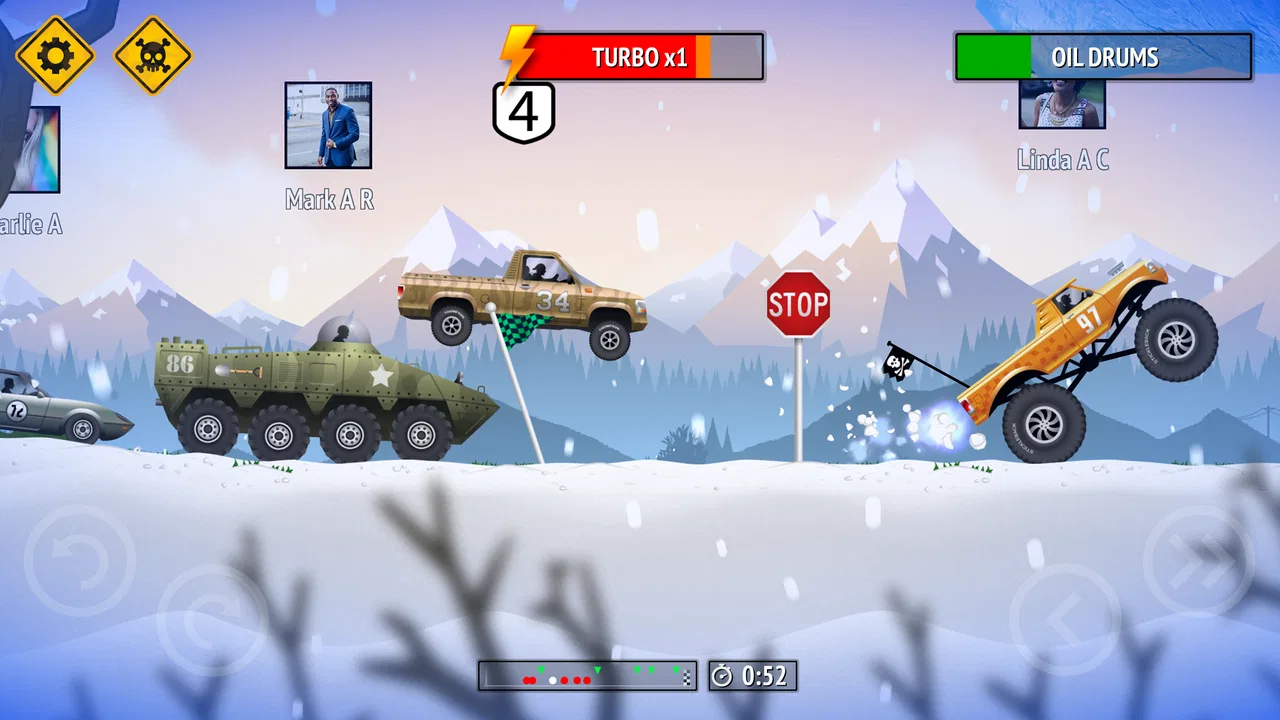
Renegade Racing is the kind of mobile racing game I open when I want quick action rather than a serious driving simulation. Developed by Not Doppler, it puts the emphasis on energetic races, simple controls, and the satisfaction of getting a little more out of each run. I found it easy to understand within minutes, but there is enough room for timing and route awareness to keep the races from feeling completely automatic.
It is a free racing game for Android, rated Everyone 10+, and the current version is 1.3.4. The game has reached over 50 million installs and holds a 4.5 average from around 108 thousand ratings, which gives a useful sense of its broad appeal without telling the whole story. My experience is that its best quality is accessibility: you can pick it up during a short break, learn the basic rhythm quickly, and still have reasons to improve after the first few races.
How the racing feels in everyday play
The first thing I noticed is that this is not built around long, realistic races. Its appeal comes from compact bursts of driving where reactions matter more than patiently managing a full championship. That makes it a good fit for a commute, a waiting room, or a few minutes before bed. I can play a small number of races without feeling that I have started an activity I must finish immediately.
You May Also Like

 Blood Strike: 2.5 Anniversary
Blood Strike’s Loadouts Turn Every Drop Into a Tactical Gamble
A close look at Blood Strike’s custom loadouts: how fast access to signature weapons reshapes its battle royale rhythm, rewards preparation, and narrows the gap between fights.

 Pandora - Music & Podcasts
Pandora’s Music Is Easy to Start, but Harder to Recover
Pandora’s strength is its low-effort path from a seed to a station. Its weak spot is how much confidence it asks you to place in connection, setup, and quiet recovery.

 8 Ball Pool
 Is Built on Rivalries, Rematches, and Routine
A close look at the rivalries, rematches, shared routines, and unanswered safety questions that turn a quick pool match into a persistent mobile community.

 Samsung Music
’s Quiet Strength Is Playing What You Already Own
Its reach comes less from spectacle than from dependable access to a personal library. That simplicity is both the app’s strongest retention engine and its ceiling.

 AccuWeather: Weather Radar
AccuWeather Review: A Quick, Clear Forecast for Everyday Decisions
For everyday plans, the best forecast is the one you can understand quickly. AccuWeather makes rain timing, radar, and local conditions easy to act on, with a few trade-offs.

 Hill Climb Racing
Why Hill Climb Racing Still Turns Crashes Into One More Run
A tiny car, a bumpy hill and one more upgrade: Hill Climb Racing keeps resurfacing because its simple chaos makes every near-miss feel personal.
More From Our News Desk



The controls are approachable, but that should not be confused with a complete lack of skill. A beginner can understand the basic movement quickly, while a more experienced player will pay attention to launch timing, jumps, landings, and the way the track flows. The difference between an untidy run and a clean one is often less about holding a button and more about choosing the right moment to act.
That timing focus gives the game a pleasant arcade character. I do not approach it expecting the weight, braking detail, or careful corner work of a console-style simulator. Instead, I treat each attempt as a compact challenge: keep momentum, avoid wasting an opportunity, and learn from the point where the run went wrong. This makes failure easier to accept than in a longer racing game.
One useful habit is to resist reacting too late after a jump. It is tempting to make a last-second correction whenever the car is airborne, but that can turn a manageable landing into a clumsy one. I found better results by watching the shape of the track ahead and making smaller adjustments earlier. That is a simple tip, yet it changes the game from random-looking movement into something I can gradually control.
The same applies to replaying a familiar course. Rather than trying to drive faster everywhere, I focus on one section at a time. If I lose speed at a jump, I repeat the race with that moment in mind. If I land safely but arrive at the next obstacle badly positioned, I adjust the approach instead. This makes improvement feel practical instead of mysterious, especially for players who enjoy shaving mistakes from a short run.
A good fit for short sessions
In a realistic everyday scenario, I would recommend it to someone who has ten minutes between errands and wants more involvement than a passive puzzle. A few races can provide a clear beginning and end, and the quick format reduces the pressure to reserve a large block of time. It also works well when concentration comes in small bursts, because a single run gives immediate feedback.
That convenience has a trade-off. If you prefer a deep career mode, lengthy events, or a calm driving experience, the compact arcade structure may feel thin. The game is strongest when I accept its intended rhythm instead of expecting it to replace a full racing package. It gives me quick decisions and repeated attempts, not a complete motorsport management hobby.
What the free entry point really means
Renegade Racing is free to download and play, so there is no upfront purchase required to discover whether its handling suits you. That matters here because the game’s appeal depends heavily on personal taste. Some players will enjoy the fast, playful approach immediately; others will want more precise simulation or a different progression style. Free access lets you make that decision through use rather than guesswork.
There are in-app purchases priced from $0.99 to $39.99 per item. I would treat those as optional spending decisions rather than part of the basic cost of trying the game. The sensible approach is to play first, decide whether the core races hold your attention, and only then consider whether any purchase is worth it to you. A free starting point does not automatically mean every later purchase offers good value for every player.
For me, the important distinction is between access and long-term value. The free download provides a low-risk way to test the controls and pacing. Paid value depends on how much time I expect to spend with the game and whether the available purchases solve a problem I actually have. I would not spend simply because a progression moment feels slow; I would spend only if the purchase clearly improves my personal way of playing.
Families should also remember the age guidance. The game is rated Everyone 10+, so I would still check the device’s purchase controls before handing it to a child. That is less about the racing itself and more about avoiding accidental spending when optional items are available. A quick look at the device settings is a worthwhile step for shared phones and tablets.
Where the value comes from
The strongest value is repeatability. A race that goes badly is usually short enough to try again without a major time investment, and that encourages experimentation. I can test a different approach to a jump, change when I make an input, and immediately see whether the adjustment helped. That loop is more rewarding than simply unlocking content without learning anything.
I also like that its simple presentation does not require me to study a complicated control scheme before having fun. The game communicates its central idea quickly: move through the course, maintain momentum, and improve the run. That makes it suitable for people who normally avoid racing games because they associate the genre with many buttons, detailed tuning, or long tutorials.
The game’s large audience is reflected in its store presence, with more than 50 million installs and an average rating of 4.5. I do not read those figures as proof that everyone will enjoy it, but they do support the impression that the basic concept travels well across a broad mobile audience. The more useful question is whether you want quick arcade racing rather than a realistic driving model.
Its history also matters in a modest way. It was released on November 11, 2019, so it is not a brand-new experiment looking for an audience. The store summary notes that the online game had already accumulated over 190 million plays before reaching mobile, which helps explain why the design feels focused on immediate races rather than a long introduction. I still judge it by how it plays today, but that background fits the game’s concise structure.
Small techniques that improve the experience
My first practical recommendation is to use early attempts as observation runs. Instead of chasing a perfect result immediately, I watch for where the track asks me to commit and where a safer line preserves more momentum. This is especially helpful when a course includes a sequence of obstacles, because recovering from one poor decision may affect the next section.
Second, I avoid changing too many things at once. If I alter my timing, movement, and route choice in the same attempt, I cannot tell which decision helped. Keeping two elements consistent while testing one change makes the improvement process clearer. That approach is useful for players who enjoy mastery but do not want the game to become frustrating trial and error.
Third, I separate “fast” from “clean.” A reckless run can look impressive for a moment and still finish poorly because the landing ruins the next action. When I prioritize a stable sequence over one dramatic shortcut, I often produce a better overall attempt. This is one of the game’s less obvious lessons: consistency can matter more than chasing the most spectacular move every time.
Finally, I use short sessions deliberately. Playing repeatedly while frustrated makes me press too early and blame the controls for mistakes caused by impatience. Taking a break after a few failed attempts usually helps more than forcing another race. Because the game is designed for quick rounds, it is easy to return later without losing the thread of what I was practicing.
Trade-offs compared with other racing choices
Compared with a conventional simulation racer, this game asks much less of the player. You do not need to learn realistic braking points or spend time adjusting a detailed vehicle setup before a race becomes enjoyable. That is a clear advantage on a phone, especially when I want immediate play. The trade-off is that players seeking authentic vehicle behavior may find the handling too light and the race structure too focused on spectacle and timing.
Compared with a traditional kart-style racer, the emphasis feels more concentrated on navigating the course and repeating a run than on settling into a long event with many strategic layers. That can make it easier to play alone for a few minutes, but it may feel less satisfying if your favorite part of racing is building a long campaign or managing a broad collection of modes.
It also differs from slower puzzle-racing games because the appeal comes from movement and reaction rather than careful planning several turns ahead. If you like seeing an immediate result from a well-timed input, this is a better match. If you prefer relaxing at your own pace, the repeated need to react may become tiring.
These comparisons are important because the game is not trying to win every racing audience. I would choose it over a simulator when I want low-friction entertainment, and over a slower strategy racer when I want physical momentum and quick retries. I would choose something else when I want realistic cars, extensive customization, or a long-form competitive structure.
Who should install it, and who should skip it
I think it is a strong choice for casual players who want a racing game that can be learned quickly but still rewards better timing. It also suits people who enjoy repeating short challenges, noticing small improvements, and playing in bursts. Younger players within the Everyone 10+ guidance may find the accessible controls appealing, while adults can appreciate the fact that a session does not need to take over the evening.
It is less suitable for someone who dislikes retries. The game’s satisfaction comes partly from trying again after a mistake, so a player who wants every race to feel smooth on the first attempt may become annoyed. I would also skip it if my main requirement were a realistic driving experience, a detailed vehicle garage, or a deep single-player career. Those expectations point toward a different kind of racing game.
People who are sensitive to optional spending should approach the purchase system with a plan. Since the game is free to start but includes items ranging from $0.99 to $39.99, I would keep device purchase protections active and avoid treating a difficult moment as a reason to buy immediately. The most reliable value test is simple: if the free experience is not enjoyable, paying more is unlikely to fix the underlying mismatch.
My final recommendation
After spending time with it, I see Renegade Racing as a focused arcade racer rather than an all-purpose racing replacement. Its free entry point, approachable controls, and short attempts make it easy to recommend to a friend who wants something energetic without a long commitment. The best moments come from learning a course, improving a landing, and turning a messy run into a controlled one.
I would recommend installing it first and judging the handling during ordinary play. Give it enough time to see whether repeated attempts feel satisfying rather than repetitive. If the quick rhythm clicks, the game offers good entertainment without requiring an upfront payment. If you are looking for realism, extensive progression, or a slower and more deliberate driving experience, you will probably get better value from another racing option.
My verdict is positive, with sensible limits: the free access is the clearest value, while optional purchases deserve a personal cost-benefit check. For casual arcade racing on a compatible device running Android 5.0 or later, I think it earns a place among the easier games to pick up and replay. Just approach it for what it does best—fast, compact racing built around timing—not for features belonging to a more serious simulator.
FAQs for Renegade Racing
01What type of gameplay does Renegade Racing offer?
Renegade Racing provides an exhilarating multiplayer racing experience with unique challenges. Players can choose from a variety of vehicles, each with distinct abilities, to race through dynamic tracks filled with obstacles and stunts. The game emphasizes speed, tricks, and strategic use of power-ups to outpace opponents.
02Is Renegade Racing free to play, and are there in-app purchases?
Yes, Renegade Racing is free to download and play. However, it offers in-app purchases that allow players to buy coins, unlock vehicles, or access exclusive content. While not necessary for enjoying the game, these purchases can enhance your racing experience and help you advance more quickly.
03What are the system requirements for Renegade Racing?
Renegade Racing requires a device with Android 4.4 or higher, or iOS 9.0 or later. It's optimized for smartphones and tablets, ensuring smooth gameplay. Be sure to have adequate storage space and a stable internet connection to fully enjoy the multiplayer features and regular updates.
04Does Renegade Racing support multiplayer modes?
Yes, Renegade Racing features a robust multiplayer mode where you can compete against players worldwide. The game uses a matchmaking system to pair you with opponents of similar skill levels, creating a competitive and enjoyable experience. You can also race against friends by inviting them to join your game.
05How does the progression system work in Renegade Racing?
In Renegade Racing, progression is achieved by winning races, completing challenges, and performing stunts. As you progress, you earn coins and unlock new vehicles and tracks. The game also features a ranking system, allowing players to climb leaderboards and earn rewards based on their performance in races.
Pros
- Engaging and varied racing tracks.
- Customizable vehicles for unique gameplay.
- Smooth controls enhance user experience.
- Exciting multiplayer mode available.
- Frequent updates with new content.
Cons
- In-app purchases can be costly.
- Some ads interrupt gameplay.
- Occasional lag in multiplayer mode.
- Requires constant internet connection.
- Limited offline play options.

Renegade Racing
Gallery